
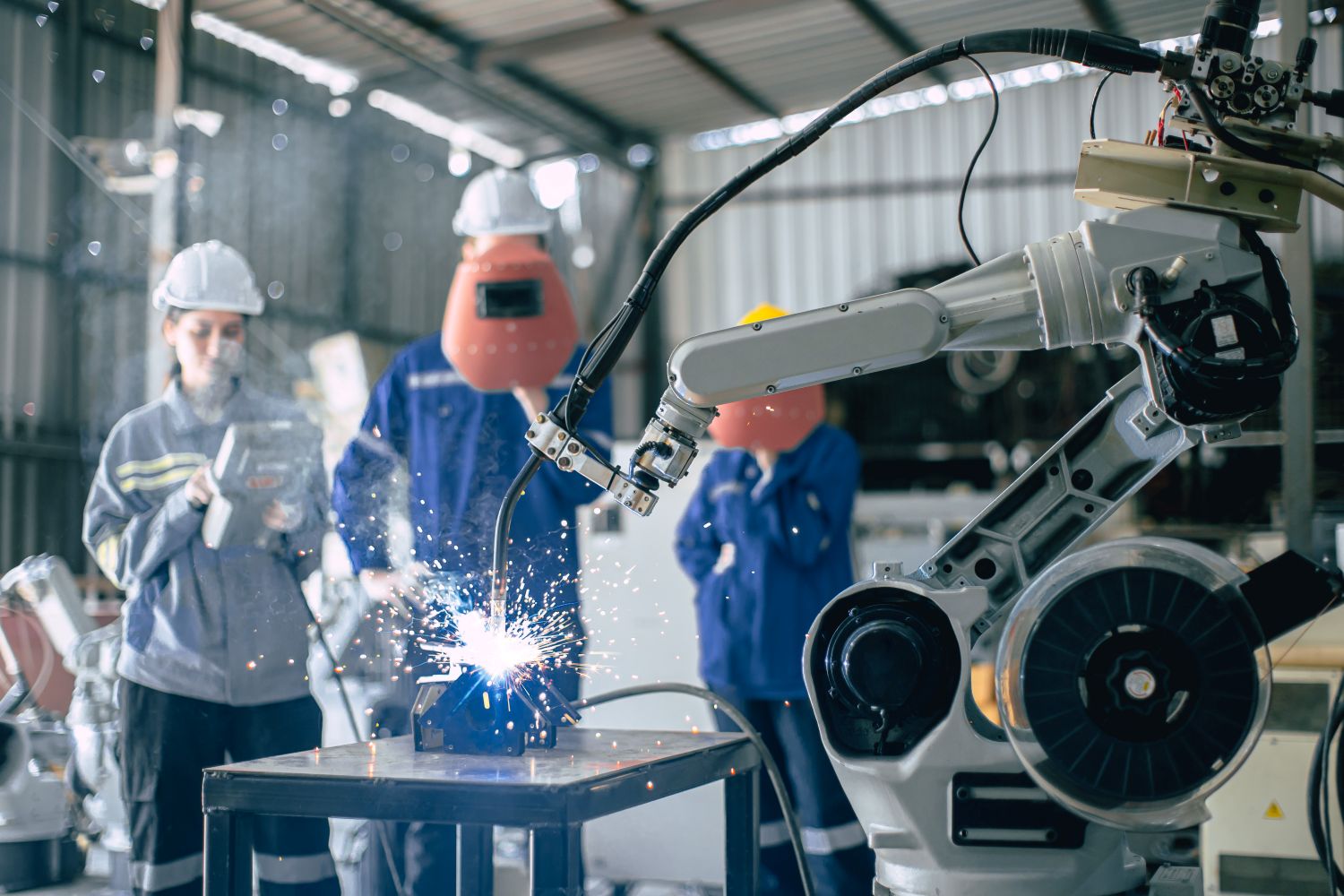
The welding industry has undergone significant advancements in recent years, with the integration of robotic technology revolutionizing traditional welding practices. Welding robots are increasingly becoming a staple in manufacturing and fabrication processes, offering enhanced precision, efficiency, and safety. This article explores how welding robots are transforming the industry, the benefits they bring, and the future of automated welding solutions.
The Rise of Welding Robots
Evolution of Welding Technology
Welding has been a fundamental manufacturing process for decades, used in various industries such as automotive, aerospace, construction, and shipbuilding. Traditional welding methods rely heavily on skilled labor, which can lead to variability in quality and increased production time. The introduction of welding robots has marked a paradigm shift, enabling manufacturers to automate and optimize their welding processes.
Types of Welding Robots
- Articulated Robots: These robots have rotary joints that allow for a wide range of motion, making them suitable for complex welding tasks. They are commonly used in automotive manufacturing for welding car frames and components.
- Collaborative Robots (Cobots): Cobots are designed to work alongside human operators, enhancing productivity while ensuring safety. They can assist in tasks such as spot welding and handling materials.
- Cartesian Robots: These robots operate along three linear axes, making them ideal for straightforward welding applications, such as in assembly lines.
Benefits of Welding Robots
1. Increased Precision and Consistency
Welding robots are programmed to execute tasks with high precision, resulting in consistent weld quality. This consistency reduces the likelihood of defects and rework, ultimately improving the overall quality of the final product. Automated welding processes ensure that each weld meets the specified standards, enhancing reliability.
2. Enhanced Productivity
Robotic welding systems can operate continuously without fatigue, significantly increasing production rates. They can perform repetitive tasks faster than human welders, allowing manufacturers to meet higher demand levels and tight deadlines. This increased productivity translates to improved efficiency and profitability for businesses.
3. Improved Safety
Welding can be a hazardous occupation, with risks including exposure to harmful fumes, intense heat, and the potential for accidents. By automating the welding process with robots, companies can minimize the risk to human workers. Robots can perform dangerous tasks in environments that may be unsafe for people, reducing workplace injuries and promoting a safer work environment.
4. Cost Savings
While the initial investment in welding robots can be significant, the long-term cost savings can be substantial. Increased productivity, reduced labor costs, and lower defect rates contribute to overall cost efficiency. Additionally, the ability to operate continuously means that robots can help companies meet production goals without the need for overtime pay or additional staffing.
5. Flexibility and Adaptability
Modern welding robots can be programmed for various tasks, making them highly adaptable to different projects. Manufacturers can easily switch between different welding applications, allowing for greater flexibility in production. This adaptability is particularly beneficial for companies that produce a wide range of products or need to respond quickly to changing market demands.
Applications of Welding Robots
1. Automotive Industry
The automotive sector has been one of the earliest adopters of robotic welding technology. Robots are used extensively for spot welding, seam welding, and assembling various components, such as chassis and body panels. Their precision and speed have transformed the manufacturing process, allowing for mass production while maintaining high safety and quality standards.
2. Aerospace Manufacturing
In the aerospace industry, where structural integrity is paramount, welding robots are utilized for joining lightweight materials and complex assemblies. The precision offered by robotic welding ensures that critical components meet stringent safety regulations and performance criteria.
3. Heavy Equipment and Machinery
Welding robots are also employed in the production of heavy equipment, such as construction machinery and agricultural implements. The ability to handle large components and perform consistent welds is essential in this industry, where durability and strength are vital.
4. Metal Fabrication
Robotic welding is widely used in metal fabrication shops for a variety of applications, including creating custom metal structures and components. The versatility of welding robots allows fabricators to take on diverse projects with efficiency and precision.
The Future of Welding Robots
1. Advances in Technology
The future of robotic welding is poised for continued innovation, with advancements such as artificial intelligence (AI), machine learning, and improved sensors. These technologies will enhance the capabilities of welding robots, enabling them to learn from their environments and optimize their performance over time.
2. Collaborative Robotics
As the demand for flexibility and efficiency grows, collaborative robots (cobots) are expected to play an increasingly significant role in welding applications. Cobots can work alongside human operators, assisting with tasks and improving overall productivity while ensuring safety.
3. Integration with Industry 4.0
The integration of welding robots into the broader framework of Industry 4.0 will transform manufacturing processes. Smart factories will leverage data analytics and connectivity to optimize welding operations, predict maintenance needs, and enhance quality control.
Conclusion
Welding robots are transforming the manufacturing landscape by offering increased precision, productivity, safety, and cost savings. As industries continue to embrace automation and innovation, the applications and benefits of robotic welding will expand, paving the way for more efficient and effective manufacturing processes. Understanding the pivotal role of welding robots is essential for businesses looking to stay competitive in an evolving market. By investing in robotic technology, manufacturers can enhance their capabilities, improve product quality, and ultimately drive success in their operations.